Going Viral
How Should Small Brands Use Short-Form Video Marketing?
ZippyClip Team · 2026-10-29T11:00:00+00:00
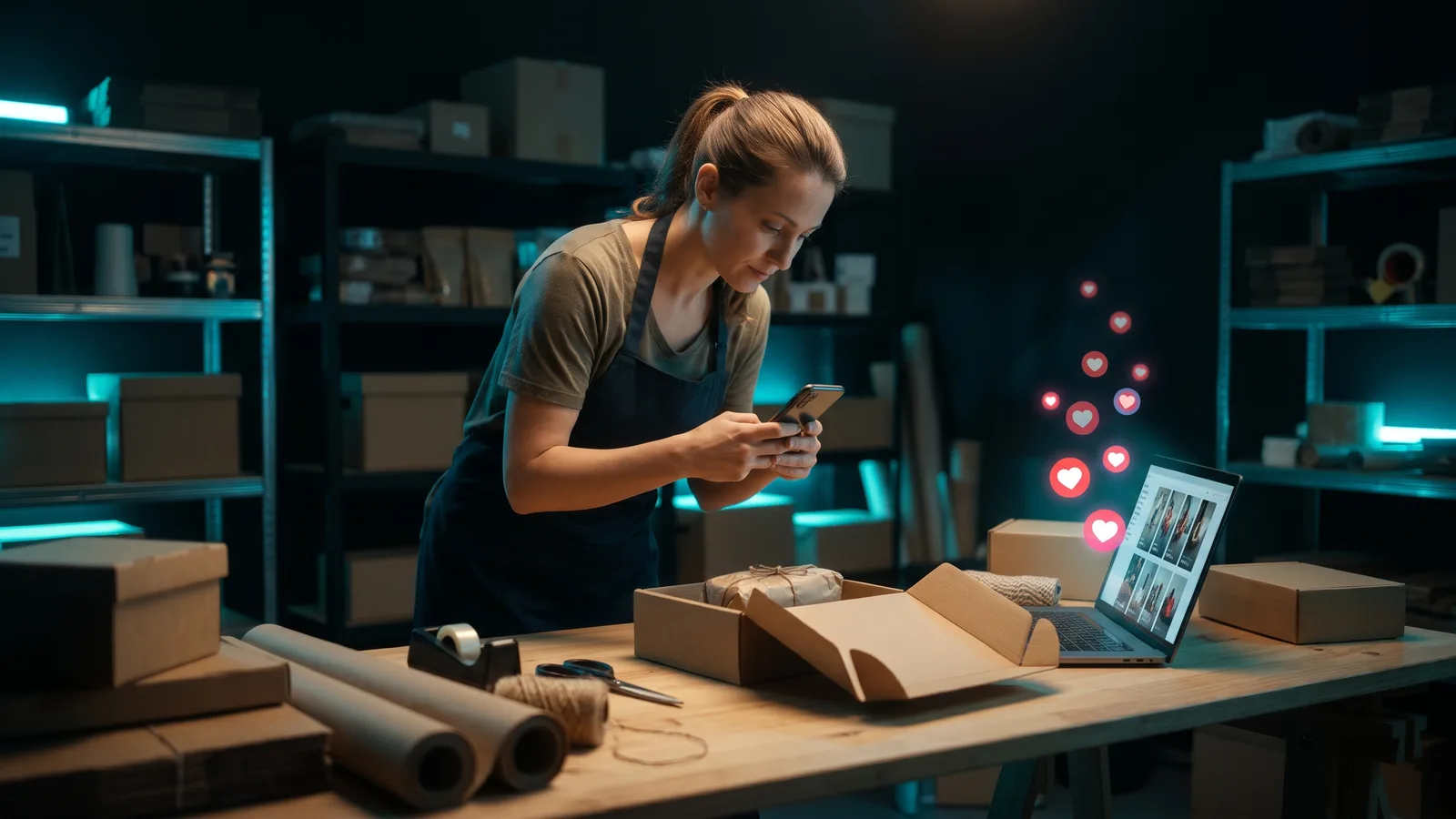
Short-form video marketing for brands works best as a steady series of native, vertical videos about what customers care about: your product in use, the problem it solves, behind the scenes, customer stories and quick tips. Hook viewers fast, post on a schedule you can keep, track retention, shares and clicks, and boost only proven winners.
Key takeaways
- Make content, not commercials. TikTok, YouTube and Meta all say short videos work best when they feel native to the feed, not like TV ads.
- Use 3–5 repeatable formats so you never start from a blank page: product in use, problem/solution, behind the scenes, customer stories and education.
- Post on a rhythm you can keep. Buffer's 2026 guide suggests 2–5 TikToks, 3–5 Instagram posts and 1–3 Shorts a week.
- Measure attention, not just views. Watch time, skip rate, shares (sends) and link clicks tell you what to make next.
- Go organic first, then pay. Boost proven winners with TikTok Spark Ads, Instagram's Boost or YouTube's Promote button.
Why should brands bother with short-form video?
Because it's where people now engage with brands most. Sprout Social's 2026 Social Media Content Strategy Report says social users rate short-form video as the brand content they're most likely to engage with on nearly every platform, and prefer it under 60 seconds.
HubSpot's 2025 State of Marketing report, as summarized on HubSpot's blog, says most marketers find short-form video gives the highest ROI of any format. Meta's Reels Ads Guide, as reported by Social Media Today in July 2025, says video makes up over 60% of time spent on Facebook and Instagram.
Good news for small brands: TikTok says follower count is not a direct factor in what it recommends.
What types of short-form videos work best for brands?
The best formats show your product through your customer's eyes. Pick three to five and repeat them weekly.
1. Product in use
Show the product doing its job, not sitting on a shelf. TikTok's own business guidance says to show the product in action and its variations, and to open with an unboxing, a close-up or a creative demo. Google's Shorts advice is similar: scrappy production that shows the product in action, not a hard sell.
2. Problem and solution
Start with the pain your customer feels, then show how you fix it. TikTok recommends leading with the pain point and how the product saves time, money or hassle. Meta research reported by Search Engine Land in December 2025 found that adding context (benefits and selling points) to Reels ads raised purchase intent 5.3x.
3. Behind the scenes
Show how things get made, packed or delivered. TikTok for Business tells brands to share their character and invite viewers into the business journey. One small shop featured by the U.S. Chamber of Commerce got 480,300 views on a simple "pack an order with me" video (figure as of January 2022).
4. Customer stories
Let real customers do the selling. TikTok's creative guide suggests turning top reviews into videos with text overlays and voiceover: why they bought, the benefits they noticed and how easy it was to use. You can also reply to a customer's comment with a video, a tactic the U.S. Chamber of Commerce highlights for small businesses.
5. Quick education
Answer the questions buyers ask before they buy. A short tip series ("3 signs you need…", "how to choose the right size") answers buyer worries and gives you endless topics. Sprout Social's Q2 2025 Pulse Survey found 57% of social users want brands to prioritize original content series.
How do you make a brand video people actually watch?
Hook them in the first seconds, then deliver on the promise. TikTok says to land the hook within 6 seconds and get your core message across in the first 3. In the same Meta research, reported by Search Engine Land, branding and message in the first 5 seconds made Reels ads 1.7x more likely to reach the top purchase-intent tier.
TikTok recommends a simple structure:
- Hook: a question, a bold claim, a relatable line or a close-up demo.
- Value: the product in action, the benefit, the proof.
- Call to action: follow, visit the link, comment or buy.
Then format it for the feed:
- Vertical 9:16 at 720p or higher. TikTok's internal data (2021) found vertical videos got 40.1% more impressions than square or horizontal ones.
- Sound on. TikTok found 93% of its top-performing videos use audio, and Google says Shorts ads with music or voiceover increased conversions by over 20%.
- Captions on screen for silent viewers (TikTok suggests about 5–10 words per second).
- Real people, talking to camera. Google found 73% of surveyed YouTube viewers trust influencers more than celebrities (December 2023).
For more opening lines you can borrow, see our guide to writing a hook that stops the scroll.
How often should a brand post short-form videos?
Post as often as you can keep up week after week. YouTube's own Shorts advice is to pick a schedule you can keep, since regularity matters most.
Buffer's frequency guide (January 2026) gives these starting points:
| Platform | Suggested posts per week |
|---|---|
| TikTok | 2–5 (Buffer data: up to 17% more views per post than posting once a week) |
| Instagram (incl. Reels) | 3–5 |
| YouTube Shorts | 1–3 |
We found no official posting-frequency number from TikTok or Instagram, so treat these as a starting range, not a rule.
Which metrics should brands track?
Track whether people keep watching, share and take action. Views alone don't tell you much.
- Retention and watch time. TikTok says a viewer finishing a video is a strong signal. Instagram's head, Adam Mosseri, said in January 2025 that watch time, likes and sends are its top three signals.
- Skip rate / stayed to watch. According to Metricool, citing Instagram's @Creators account, Reels insights now include a retention chart and a skip rate (viewers who scroll past in the first 3 seconds). YouTube shows "stayed to watch" and engaged views for Shorts. These tell you if the hook works.
- Shares and sends. Mosseri recommends tracking sends per reach and likes per reach. A share means the video was worth passing on.
- Profile views and link clicks. These connect a video to actual business. According to analytics firm Sotrender's guide (not TikTok itself), TikTok post analytics also show traffic sources and new versus returning viewers.
Review weekly and make more of what holds attention. To test a risky idea, use Instagram's trial reels, which go to non-followers first and show results after 24 hours.
Should brands use organic or paid short-form video?
Use both: let organic posts find the winners, then pay to push them further. TikTok for Business tells small businesses to combine the two and boost their best-performing organic posts. Each platform has a simple way to do it:
- TikTok Spark Ads boost an organic post from your account, or a creator's post with their permission. Views, likes, comments and follows stay on the original post (help page updated June 2026). TikTok suggests testing for 2–3 days.
- Instagram Boost turns a Reel into an ad from your profile. The Reel must be under 60 seconds and vertical, and can't use copyrighted music, GIFs, interactive stickers or camera filters. Hootsuite (September 2026) says you can start from about $1 a day in the app, depending on region.
- YouTube Promote lets you run a campaign for a Short straight from YouTube Studio with a budget and end date (launched February 2025). Subscribers gained this way don't count toward Partner Program eligibility.
What mistakes do brands make with short-form video?
The most common mistakes are treating short-form like TV ads and giving up too soon.
- Polished ads that feel like ads. Google's Shorts advice is to fit the feed with an understated, creator-style look, not a hard sell.
- Slow openings. TikTok wants the hook within 6 seconds, so skip long logo intros.
- No sound or no captions. You lose either the sound-on or the sound-off viewer.
- Reposting watermarked files from one app to another. TikTok makes them ineligible for the For You feed, and Instagram shows them to fewer people. Upload a clean file to each platform instead.
- Mass-produced, same-looking videos. YouTube's monetization policy flags template-looking, repetitive AI content with no original insight. Vary your concepts.
- Judging by views only instead of retention, shares and clicks.
For the bigger picture on what makes videos spread, read how to make a video go viral.
Which tools help with short-form video marketing for brands?
The right tool depends on your bottleneck: ideas, making, editing or posting. ZippyClip is made by the team behind this blog.
Our pick: ZippyClip
ZippyClip is our pick for small brands without a content team because it handles both making and posting in one desktop app (Windows and macOS). You give it your website or product page. It turns your products, services and customer problems into video concepts, each with a hook, a story, and AI-generated visuals and dialogue. Then it creates the video, brings together the edit, music and captions, and posts on a schedule.
- Problem/solution videos from your offer: ask for something like "a promo that shows the problem my service solves."
- Autopilot posting to YouTube, TikTok, Facebook, Instagram and X from one screen, on a recurring schedule (for example every 6 hours or daily). TikTok publishing is a Pro feature.
- SEO titles, descriptions, hashtags and tags written for each platform.
- Your existing videos work too: viral moment detection cuts long recordings into captioned, resized shorts.
ZippyClip is free to start, with a watermark and 50 API tokens. Pro removes the watermark.
How the tools compare
| Tool | Best for | Key features | Price / free option (as of October 2026) | Watch-outs |
|---|---|---|---|---|
| ZippyClip | Brands that want concepts, videos and posting handled | URL to video concepts with hooks; creates videos; auto-posts to 5 platforms on a schedule | Free to start (watermark, 50 API tokens); Pro removes watermark | TikTok publishing needs Pro; desktop app |
| CapCut | Editing trend-style videos yourself | Templates, captions, effects, AI credits | Free; Pro $19.99/mo; Teams $12.49/seat/mo | Manual work; premium assets need Pro |
| OpusClip | Cutting long videos into shorts | Virality score, reframe, captions, scheduler on Pro | Free (60 credits, watermark); Starter $15/mo; Pro $29/mo or $174/yr | Needs long footage; Starter can't schedule posts |
| Creatify | Paid social video ads for e-commerce | Product URL to ad, AI avatars, batch variations | Free (10 credits, watermark); Standard $10/mo | Credits expire after 2 months; ads, not organic posting |
| Buffer | Scheduling videos you already have | Auto-publish to TikTok, Reels, Shorts | Free (3 channels, 10 posts each); $5/mo per channel | No video creation; no TikTok music via API |
Prices are from each tool's official pricing page as of October 2026 and can change.
If you already have videos and just need them posted, see how to auto-post videos to TikTok, Instagram and YouTube.
A simple weekly short-form playbook for small brands
- Choose 3–5 formats (for example: product in use, customer story, quick tip).
- Write one hook per video that names a problem in the first seconds.
- Make a week of videos in one batch, vertical, with sound and captions.
- Schedule them across TikTok, Reels and Shorts as clean, original uploads.
- Check retention, skip rate, shares and link clicks once a week.
- Boost the one or two winners with a small budget and test for a few days.
- Repeat what worked, drop what didn't.
Sources
- Sprout Social — Types of social media content: https://sproutsocial.com/insights/types-of-social-media-content/
- HubSpot — Short-form video trends: https://blog.hubspot.com/marketing/viral-videos
- Social Media Today — Meta Reels ads guide (Jul 2025): https://www.socialmediatoday.com/news/meta-publishes-reels-ads-guide-instagram-facebook-video-marketing/752771/
- TikTok for Business — Data-driven tips for organic content: https://ads.tiktok.com/business/ar/blog/data-driven-tips-make-organic-content-stand-out
- TikTok Business blog — Short video best practice: https://ads.tiktok.com/business/en-US/blog/tiktok-short-video-best-practice
- TikTok Brainstorm Guide: https://ads.tiktok.com/business/library/5QuickCreativeIdeas.pdf
- TikTok Ads Help — Creative best practices: https://ads.tiktok.com/help/article/creative-best-practices
- TikTok Ads Help — Spark Ads: https://ads.tiktok.com/help/article/spark-ads
- TikTok Newsroom — How TikTok recommends videos: https://newsroom.tiktok.com/en-us/how-tiktok-recommends-videos-for-you/
- TikTok — For You feed eligibility standards: https://www.tiktok.com/community-guidelines/en/fyf-standards
- Think with Google — Video advertising tips for Shorts: https://business.google.com/en-all/think/search-and-video/short-form-video-advertising-tips/
- Google Ads Help — YouTube Shorts ads: https://support.google.com/google-ads/answer/16041697?hl=en
- YouTube Help — Shorts upload tips: https://support.google.com/youtube/answer/12921536
- YouTube Help — Content performance: https://support.google.com/youtube/answer/12220281
- YouTube Help — Channel monetization policies: https://support.google.com/youtube/answer/1311392
- Search Engine Journal — YouTube lets channels boost Shorts: https://www.searchenginejournal.com/youtube-lets-channels-boost-shorts-videos/540089/
- Search Engine Land — Meta native Reels ads research: https://searchengineland.com/meta-native-reels-ads-can-lift-purchase-intent-5-3x-465615
- Social Media Today — Instagram algorithm insights (Jan 2025): https://www.socialmediatoday.com/news/instagram-shares-algorithm-insights-2025/738034/
- Instagram — Ranking explained: https://about.instagram.com/blog/announcements/instagram-ranking-explained
- Instagram for Business — Boost Reels: https://business.instagram.com/blog/boost-instagram-reels
- Metricool — Instagram Reel analytics (secondary, Feb 2026): https://metricool.com/instagram-reel-analytics/
- Sotrender — TikTok post analytics (secondary, Sep 2025): https://www.sotrender.com/blog/2025/09/tiktok-post-analytics/
- TechCrunch — Instagram trial reels: https://techcrunch.com/2024/12/10/instagram-rolls-out-trial-reels-that-arent-shown-to-a-creators-followers
- U.S. Chamber of Commerce CO— — Small business TikTok tips: https://www.uschamber.com/co/grow/marketing/small-business-tiktok-tips
- Buffer — Social media frequency guide: https://buffer.com/resources/social-media-frequency-guide/
- Buffer — Pricing: https://buffer.com/pricing
- Buffer help — Using TikTok with Buffer: https://support.buffer.com/articles/using-tiktok-with-buffer-oGEroY9Of2
- Hootsuite — Can you boost Reels on Instagram (Sep 2026): https://blog.hootsuite.com/can-you-boost-reels-on-instagram/
- CapCut — Pricing: https://www.capcut.com/pricing
- OpusClip — Pricing: https://www.opus.pro/pricing
- Creatify — Pricing: https://creatify.ai/pricing
Frequently asked questions
How often should a brand post short-form videos?
There is no official number from TikTok or Instagram. Buffer's January 2026 guide suggests 2–5 TikToks, 3–5 Instagram posts and 1–3 YouTube Shorts a week as a starting range, and YouTube advises picking a schedule you can keep.
How long should a brand's short-form video be?
Sprout Social's 2026 Content Strategy Report says social users prefer short-form brand videos under 60 seconds. For ads, Google suggests 10–30 seconds for action-focused Shorts ads, and TikTok's older guidance found 1 in 4 top videos ran 21–34 seconds.
Can I post the same video on TikTok, Reels and Shorts?
Yes, but upload a clean, original file to each platform. TikTok makes videos with other apps' watermarks ineligible for the For You feed, and Instagram shows watermarked or reposted reels to fewer people.
Should brands use organic or paid short-form video?
Use both. TikTok for Business advises small businesses to combine organic and paid and boost their best-performing organic posts, which you can do with TikTok Spark Ads, Instagram's Boost button or YouTube's Promote button.
What is the best tool for short-form video marketing for a small brand?
If you want one tool to come up with video concepts from your website, create the videos and auto-post them, ZippyClip does that for YouTube, TikTok, Facebook, Instagram and X. CapCut suits hands-on editing, OpusClip suits clipping long videos, Creatify suits paid product ads and Buffer suits scheduling videos you already have.